OSCE Strategy
The Ultimate Guide to OSCE Mark Schemes
Learn how examiners score OSCE stations, how mark sheets are built, and how to turn visible behaviors into a repeatable scoring strategy.
Read the guide →Learn it. Practice it. Perform with confidence.
Clinical examination guides, OSCE strategies, exam updates, templates and practical study resources for medical students.
Start with the framework that makes examiner expectations easier to see.
Learn how examiners score OSCE stations, how mark sheets are built, and how to turn visible behaviors into a repeatable scoring strategy.
Read the guide →Important assessment and licensing updates, translated into what they mean for OSCE practice.
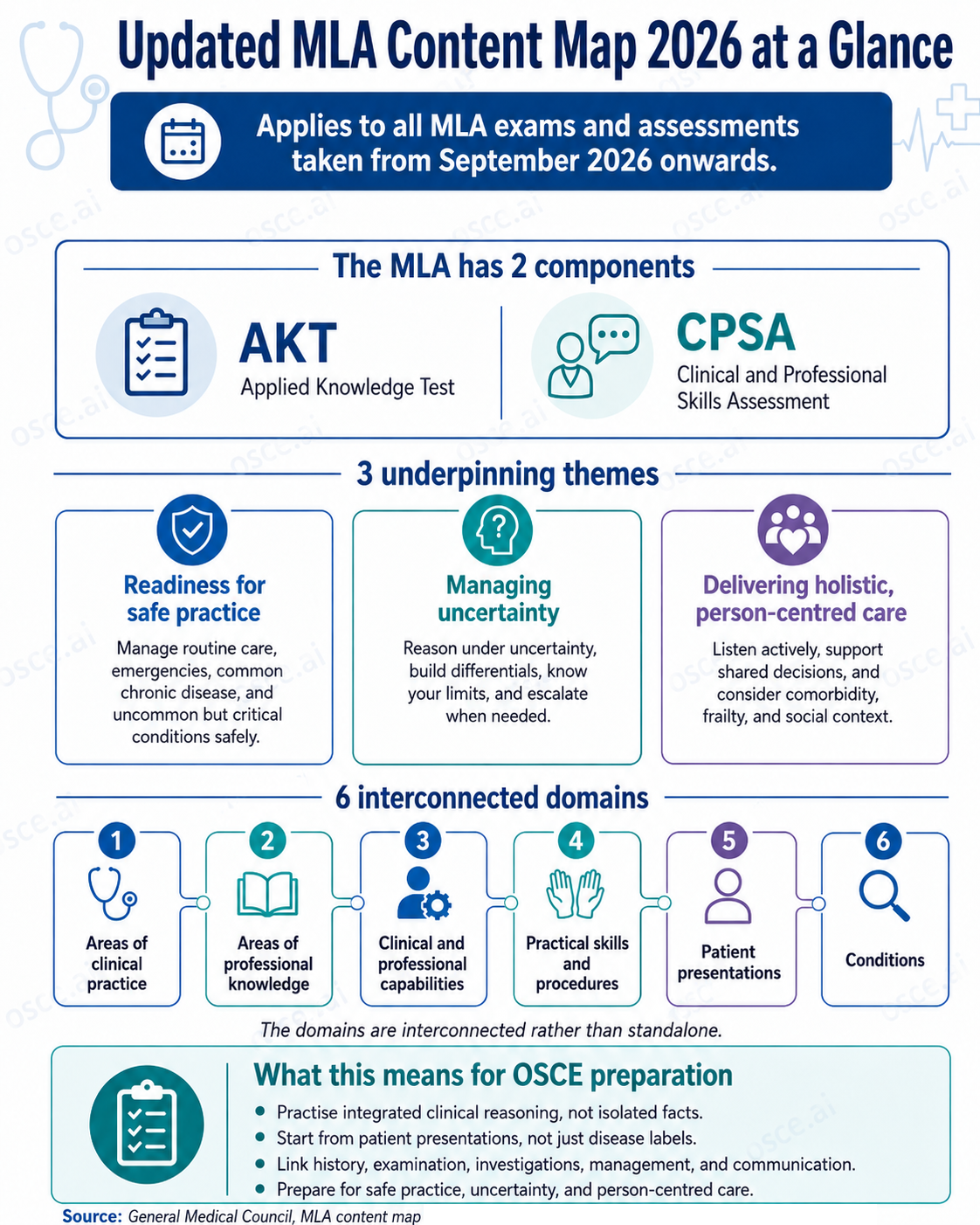 Applies from September 2026
See the six interconnected domains, three underpinning themes and the practical implications for clinical-exam preparation.
Choose a topic or follow a practical path: learn the technique, improve your approach, then put it to work in a station.
 Diabetic emergencies
Learn to distinguish two diabetic emergencies, interpret blood gases and select safe management priorities through examiner-style cases.
Read the guide →Move from recall to clinical reasoning with exam notes, flashcards, sprints and OSCE-style stations. Start with the free Abdominal Pain pathway.
Explore the Ready Pack →Use a deliberate seven-step approach to timed stations, clinical reasoning, feedback and targeted improvement.
Read the guide →Explore Core and Pro cases across specialties, or try four complete free stations with graded decisions, mark schemes and feedback.
Explore the stations → Respiratory examination
Follow the examination from inspection to auscultation, interpret key respiratory signs and adapt your approach to an unwell patient.
Read the guide →Build a systematic cardiovascular examination routine using patient scripts, examiner cues and a practical checklist.
Read the guide →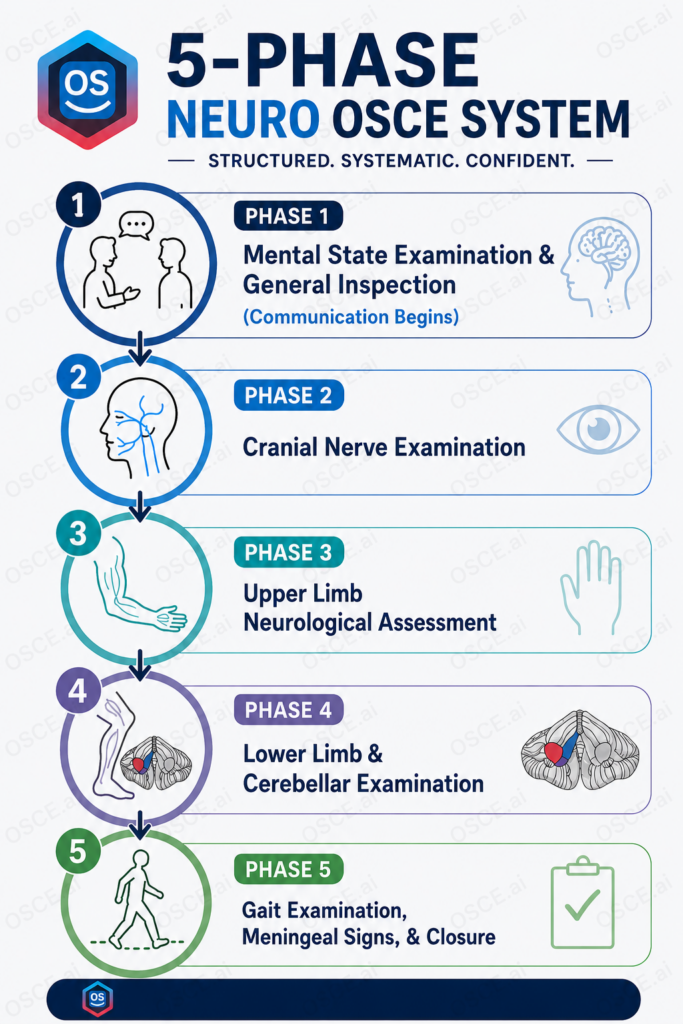 Neurological examination
Use a structured neurological examination method with clinical technique, examiner-visible actions and patient-centered communication.
Read the guide → Improve your performance
Understand why knowledge does not always translate into performance, then identify specific weaknesses and practice the skills that need work.
Read the article →Learn how examiners score observable behaviors and use that understanding to guide your preparation.
Read the guide →Practice prioritizing safe actions in ethical dilemmas with six on-page scenarios and a free 60-question PDF.
Explore ethics practice →Bridge patient experience and examiner-observable communication with a practical patient-centered checklist.
View the checklist →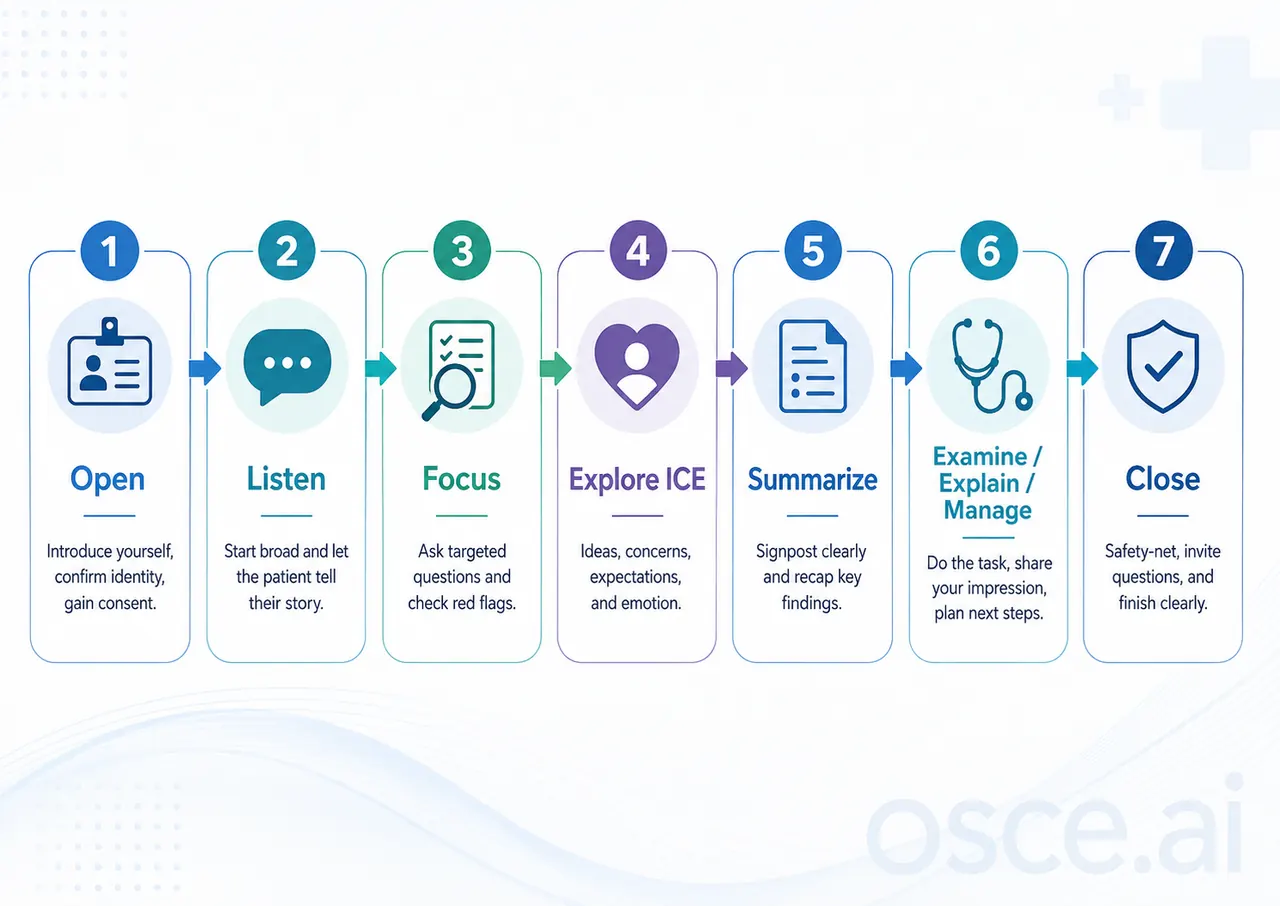 Reusable OSCE framework
Use a flexible structure for history taking, examination, communication, counseling and management stations.
Read the guide →Choose a portable device setup and workflow that helps fit realistic OSCE practice into everyday study.
Read the guide →MLA · September 2026Review the six domains, three underpinning themes and their implications for clinical-exam preparation.
Read the update → Inside OSCE AI
Dr. Zhishan Guo explains the ideas behind interactive patient encounters, immediate feedback and progress-aware practice.
Read the article →